
Energy Performance Certificate Greece – The Complete Guide by Samos Housing
Every property owner in Greece who wants to sell or rent a property must obtain an Energy Performance Certificate (EPC) — known in Greek as the Πιστοποιητικό Ενεργειακής Απόδοσης (ΠΕΑ). Greek law makes this mandatory for every sale, every rental and every property advertisement. Without a valid EPC, no notary signs a sale contract and no rental agreement registers legally with the Greek tax authority. Samos Housing's licensed energy inspectors issue your energy performance certificate Greece quickly and professionally — from €190 + VAT. If you also need to legalise an illegal building, produce an Electronic Building ID or obtain a certified property valuation, our team handles all of it from one office on Samos Island.
Book Your EPC Inspection – From €190 + VAT →
What Is an Energy Performance Certificate in Greece?
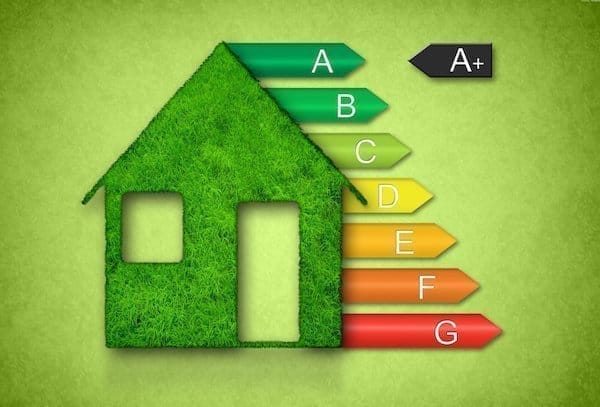
An energy performance certificate Greece — the ΠΕΑ — is an official document that a licensed energy inspector issues after an on-site inspection of your property. It measures the building's total energy consumption and assigns it an energy class from A+ (most efficient) down to H (least efficient). The certificate also lists specific technical recommendations for improving the property's energy performance.
Law 4122/2013 governs the EPC in Greece, implementing the European Union's Energy Performance of Buildings Directive (EPBD). The Greek Ministry of Environment and Energy (YPEN) oversees all EPC regulations and maintains the national KENAK registry where all certificates register. Every valid EPC carries a unique registration number on the KENAK database — without this number, the certificate has no legal standing.
Official Energy Class Scale – Greece (A+ to H)
As it appears on your official ΠΕΑ certificate — based on KENAK / YPEN methodology
Most older Greek properties score D to H. A higher class means lower running costs and higher resale value.
When Is an Energy Performance Certificate Greece Mandatory?
Greek law requires an energy performance certificate in every one of these situations — no exceptions:
- Property sale — the seller presents a valid EPC at the notary before signing the final sale contract. No EPC means no sale. See our properties for sale on Samos — every listing we publish already carries a valid energy class.
- Long-term rental — every new rental agreement requires a valid EPC. Without it, the lease cannot register in the AADE (TAXIS) digital tax system and the contract carries no legal standing.
- Short-term rental (Airbnb / STAMA) — short-term rental registrations in Greece also require a valid EPC. AADE enforces this requirement at the registration stage.
- Property advertisements — since 1 January 2021, every property listing for sale or rent must state the energy class as it appears on the EPC. This applies to real estate agents, portals like Spitogatos and XE.gr, and private owner listings alike.
- New construction completion — a new EPC is mandatory upon completion of any new building or building unit. If you build on Samos, see our construction and building permits service — we issue the EPC at completion.
- After radical renovation — any property that undergoes a renovation affecting more than 25% of the building envelope requires a new EPC upon completion.
One important clarification: the EPC applies to all building units regardless of size. Greek law sets no minimum square metre threshold that exempts a property from this requirement.
Energy Classes – What Does Your Rating Mean for Your Property?
A higher energy class directly increases a property's market value and rental appeal. Buyers and tenants factor energy running costs into their decisions more than ever — especially as electricity prices in Greece remain high. Our certified property valuers factor the energy class into every formal property valuation we produce.
| Energy Class | Rating | Typical Property Type | Market Impact |
|---|---|---|---|
| A+ | Nearly zero energy | New passive house builds | Maximum value – lowest running costs |
| A | Very high efficiency | Modern well-insulated properties | Excellent value – very attractive to buyers |
| B+ | High efficiency | Post-2000 builds with good systems | Strong value – above market average |
| B | Above average | Post-1990 buildings with upgrades | Good – solid rental and sale appeal |
| C | Average | Renovated pre-1990 buildings | Market average – acceptable to most buyers |
| D | Below average | Older Greek buildings, no renovation | Lower value – buyers expect price reduction |
| E | Poor | Pre-1980, minimal insulation | Reduced appeal – high running costs |
| Z | Very poor | Old uninsulated stone buildings | Low appeal – significant upgrade needed |
| H | Extremely poor | Abandoned or derelict buildings | Lowest class – very high energy costs |
Why Most Greek Properties Score a Low Energy Performance Rating
Greek buildings account for approximately 36% of total national energy consumption, according to YPEN. Greece consistently ranks among the most energy-intensive building stocks in Europe — and the causes are structural. Most of the problem traces back to the construction era and the complete absence of energy legislation for decades.
The majority of residential buildings in Greece went up before 1980 — well before thermal insulation requirements entered Greek building law. As a result, most older properties carry one or more of these problems:
- No wall or roof insulation — the single biggest driver of poor energy class ratings across Greece
- Single-glazed aluminium window frames — highly conductive and thermally inefficient
- No sun shading on south and west facades — ignoring Greece's intense solar radiation as a passive cooling and heating resource
- Outdated heating and cooling systems — old oil boilers and inefficient split units with poor performance ratings
- No solar thermal water heating — despite Greece carrying one of the highest solar irradiance levels in all of Europe
On Samos Island specifically, a large proportion of the housing stock consists of stone farmhouses and older village homes built well before 1980. Many carry E, Z or H energy ratings. A low energy class does not prevent a sale or rental — but the owner must clearly state it in every advertisement and in every sale document. If you plan to sell a property on Samos, our team issues the EPC and lists the property without delay.
How Long Is an Energy Performance Certificate Greece Valid?
A Greek energy performance certificate is valid for 10 years from the date of issue — provided the owner makes no major structural or system changes during this period. If the owner carries out a radical renovation, the existing EPC expires immediately and a new inspection is required.
One important rule for landlords: if you renew an existing rental agreement with the same tenant and the original contract holds a valid EPC registration, you do not need a new certificate — provided it has not expired. For any new tenancy or new sale, the EPC must be current and valid at the moment of signing. If you manage multiple rental properties on Samos, our team tracks your EPC expiry dates and alerts you when a renewal is due.
What Happens Without an Energy Performance Certificate Greece?
Skipping the EPC carries real legal and financial consequences. Greek authorities enforce these rules actively and penalties are not trivial:
- Sale blocked at notary — no notary in Greece signs a final sale contract without a valid EPC. The transaction stops entirely until the owner produces one — causing costly delays right at the moment of closing.
- Rental contract legally invalid — without an EPC, the rental agreement cannot register with the AADE tax system. The landlord cannot declare rental income legally and faces tax penalties.
- Fines for advertising without energy class — publishing a property listing for sale or rent without the energy class is a legal violation. Both the owner and the real estate agent face financial penalties on inspection.
- Short-term rental registration denied — AADE requires a valid EPC to register a short-term rental property. Without it, the property cannot operate legally on Airbnb or any similar platform.
How We Issue Your Energy Performance Certificate Greece – Step by Step
Samos Housing's licensed energy inspectors issue your energy performance certificate Greece efficiently and with minimal disruption to your schedule. Here is exactly how the process works:
- Step 1 – Book your inspection: Contact us to arrange a site visit. We schedule the inspection within a few days of your request — or sooner if you face a tight deadline.
- Step 2 – On-site inspection: Our licensed energy inspector visits the property, measures all spaces, documents the construction type, insulation, glazing, heating and cooling systems, and collects all technical data the KENAK methodology requires.
- Step 3 – Energy calculation: We run the full energy performance calculation using the official KENAK software, determine the primary energy consumption and assign the energy class.
- Step 4 – Certificate issuance: We register the EPC on the national KENAK database, issue the official certificate with its unique registration number and deliver it to you — ready to use for your sale, rental or listing.
The entire process typically completes within 3–5 working days for standard residential properties. If your sale or rental closes imminently, contact us and we prioritise your inspection immediately.
Energy Performance Certificate Greece – Pricing
| Property Type | Starting Price | Notes |
|---|---|---|
| Studio / Apartment up to 50 m² | €190 + VAT | Standard residential unit |
| Apartment 50–100 m² | On request | Price varies by construction type and systems |
| House or Villa 100–200 m² | On request | Includes all levels and outbuildings |
| Large Property / Commercial Building | On request | Quoted individually |
Contact us with your property size and location and we confirm the exact price the same day.
The Εξοικονομώ Program – A Brief Note
The Greek government periodically runs the Εξοικονομώ (Exoikonomo) program — a co-funded EU subsidy scheme that helps homeowners finance energy upgrades such as insulation, new windows and modern heating systems. The program uses the energy performance certificate as its baseline document — no application proceeds without a current EPC that establishes the property's starting energy class. You find full details on the official Εξοικονομώ program website.
Our office does not manage Εξοικονομώ applications. The program involves significant administrative complexity and requires coordinating with multiple contractors, banks and government bodies. We recommend contacting a specialist energy consultancy for Εξοικονομώ support. What we provide is the energy performance certificate Greece that the program requires as its mandatory first step — quickly and correctly.
Complete Your Property Transaction – Related Services
Samos Housing covers every legal and technical requirement for property transactions on Samos Island and across Greece. Alongside the EPC, you may also need these services — our team delivers them all from one office:
-
Electronic Building ID Greece (Ταυτότητα Κτιρίου)
Mandatory for all property sales from April 2022. We produce it alongside the EPC for a fully compliant sale package. -
Illegal Building Legalisation Greece
If your property carries unpermitted structures, legalise them before 31 March 2028. The EPC and legalisation certificate together clear every legal obstacle to sale. -
Survey Topography Plan Greece
Certified EGSA 87 GPS survey — required for most property transactions and legalisation submissions on Samos. -
Certified Property Valuation Greece
Formal PeopleCert-certified valuation for sale, mortgage or inheritance. Our valuers factor the energy class directly into the assessed market value. -
New Construction & Building Permits Samos
New builds require an EPC on completion. We handle the building permit, construction supervision and the final EPC from one team. -
Properties for Sale on Samos Island
Browse our full listings — every property we advertise carries a declared energy class, fully compliant with Greek law.
Frequently Asked Questions – Energy Performance Certificate Greece
What is the Energy Performance Certificate in Greece?
The Energy Performance Certificate Greece — ΠΕΑ (Πιστοποιητικό Ενεργειακής Απόδοσης) — is an official document that a licensed energy inspector issues after measuring a building's energy consumption. It assigns the property an energy class from A+ to H and registers on the national KENAK database. Law 4122/2013 makes it mandatory for every property sale, rental and advertisement in Greece.
Is an energy performance certificate mandatory for rental properties in Greece?
Yes. Every new rental agreement in Greece requires a valid EPC. Without it, the landlord cannot register the contract with the AADE tax system. The contract carries no legal standing and the landlord faces tax penalties. This rule applies to long-term, short-term and Airbnb-style rentals alike.
How long is the energy performance certificate valid in Greece?
A Greek EPC is valid for 10 years from the date of issue. If the owner carries out a radical renovation during this period, the certificate expires immediately and a new inspection is required. For any new tenancy or new sale, the EPC must be current and valid at the moment of signing.
What energy class do most Greek properties get?
Most older Greek properties — particularly those built before 1980 — receive an energy class of D, E, Z or H. This reflects the absence of insulation, single-glazed windows and outdated heating systems. A low class does not block a sale or rental — but the owner must declare it clearly in every advertisement and sale document.
Can I advertise a property without an energy performance certificate in Greece?
No. Since 1 January 2021, every property advertisement for sale or rent in Greece must state the energy class. Publishing a listing without this information is illegal. Both the property owner and the real estate agent face financial penalties on inspection by Greek authorities.
How much does an energy performance certificate cost in Greece?
Samos Housing issues energy performance certificates from €190 + VAT for small apartments. The price varies based on property size, construction type and installed systems. Contact us with your property details and we confirm the exact price the same day.
Do I need a new EPC after renovating my property in Greece?
Yes — if the renovation affects more than 25% of the building envelope. Greek law classifies this as a radical renovation and requires a new energy performance certificate before the owner sells or rents the property after completing the works.
Does the energy class affect my property value in Greece?
Yes, directly. A higher energy class increases market value and rental attractiveness. Our certified property valuers factor the energy class into every formal valuation we produce. Buyers and tenants consider energy running costs a key decision factor — especially with Greek electricity prices remaining consistently high.
What documents do I need for the EPC inspection in Greece?
For a standard residential EPC inspection you need the building permit and floor plans if available, the property area from the title deed or ENFIA tax statement, and access to the property on the day of inspection. If you have no building plans — common with older properties and illegal buildings in Greece — our inspector measures the property on-site from the physical structure.
Get Your Energy Performance Certificate on Samos Today
Whether you want to sell, rent or list your property, Samos Housing issues your energy performance certificate Greece quickly, accurately and at a competitive price. Our licensed inspectors live and work permanently on Samos Island and deliver your certificate within days. We combine the EPC with the Electronic Building ID, legalisation service and property valuation — giving you one office that handles every step of your property transaction on Samos.